European Alternatives to Google Workspace: Secure Email & Collaboration
Switch from Google Workspace to European email providers that guarantee data sovereignty, end-to-end encryption, and complete GDPR compliance without compromising on features.

Written by Kevin Christensen
Google Workspace offers powerful collaboration tools and generous storage, but there's a critical problem European businesses face: your emails stored on Google's servers—even in Frankfurt or Belgium—can be accessed by US authorities under the CLOUD Act without European court oversight or your knowledge.
This isn't hypothetical. The Austrian Data Protection Authority ruled that Google Analytics violates GDPR specifically because of this data transfer risk. Similar concerns apply to Gmail for business. For companies in healthcare, legal services, or finance, this creates a compliance nightmare where you cannot truly guarantee GDPR protection.
The solution? European email providers that offer comparable features while keeping your data under European legal protection. If you're also evaluating European alternatives to Microsoft Outlook, many of the same privacy concerns apply to both US-based email giants.
Why Google Workspace Creates Legal Vulnerability
Google promises GDPR compliance and operates data centers across Europe. But the fundamental problem isn't where your data is stored—it's who controls the company storing it.
The CLOUD Act Conflict
The US Clarifying Lawful Overseas Use of Data (CLOUD) Act requires American technology companies to provide data to US law enforcement regardless of where it's physically located. Your business emails in a European data center are still accessible to US authorities without European court approval.
This creates an irreconcilable conflict:
- GDPR requires that personal data transfers outside the EU have adequate legal protections
- The CLOUD Act permits US authorities to access data held by US companies anywhere in the world
- No legal mechanism exists to reconcile these contradictory requirements
Data Monetization Concerns
Google's business model relies on data. While Google Workspace is a paid service, questions persist about how your email data might be used for AI training, advertising optimization, or product development. The terms of service grant Google broad rights to your content.
European alternatives operate on a fundamentally different model: you pay for the service, and in return, your data remains exclusively yours. No scanning, no training AI models, no hidden data collection.
Account Suspension Risks
Google Workspace accounts are subject to automated fraud detection systems and US acceptable use policies. European businesses have experienced sudden account suspensions with limited recourse, losing access to years of email during critical periods.
European providers operate under EU consumer protection laws, offering proper due process, appeals procedures, and legal protections unavailable with US providers.
What European Email Providers Offer
Modern European email hosting isn't about sacrificing features for privacy—it's about getting both. Here's what distinguishes European alternatives from Google Workspace.
True Data Sovereignty
European providers headquartered in the EU or Switzerland operate exclusively under European jurisdiction. Your data cannot be compelled by foreign surveillance laws, period.
End-to-End Encryption Options
While Google Workspace encrypts data in transit and at rest, Google holds the encryption keys and can theoretically access your emails. Leading European providers offer zero-access encryption where even the provider cannot read your messages.
Standard Protocols, No Lock-In
European providers embrace open standards like IMAP, SMTP, CalDAV, and CardDAV. You can use your preferred email client—Apple Mail, Thunderbird, Outlook—rather than being forced into Google's ecosystem.
Transparent Pricing
Google Workspace pricing includes storage limits, per-user fees, and potential costs for add-ons. European providers typically offer straightforward pricing with generous or unlimited storage, no hidden costs, and clear terms.
Human Support from European Teams
When issues arise, European providers offer direct access to support teams who understand GDPR, speak your language, and operate during European business hours. No chatbots, no outsourced call centers, no timezone frustrations.
Top 5 European Alternatives to Google Workspace
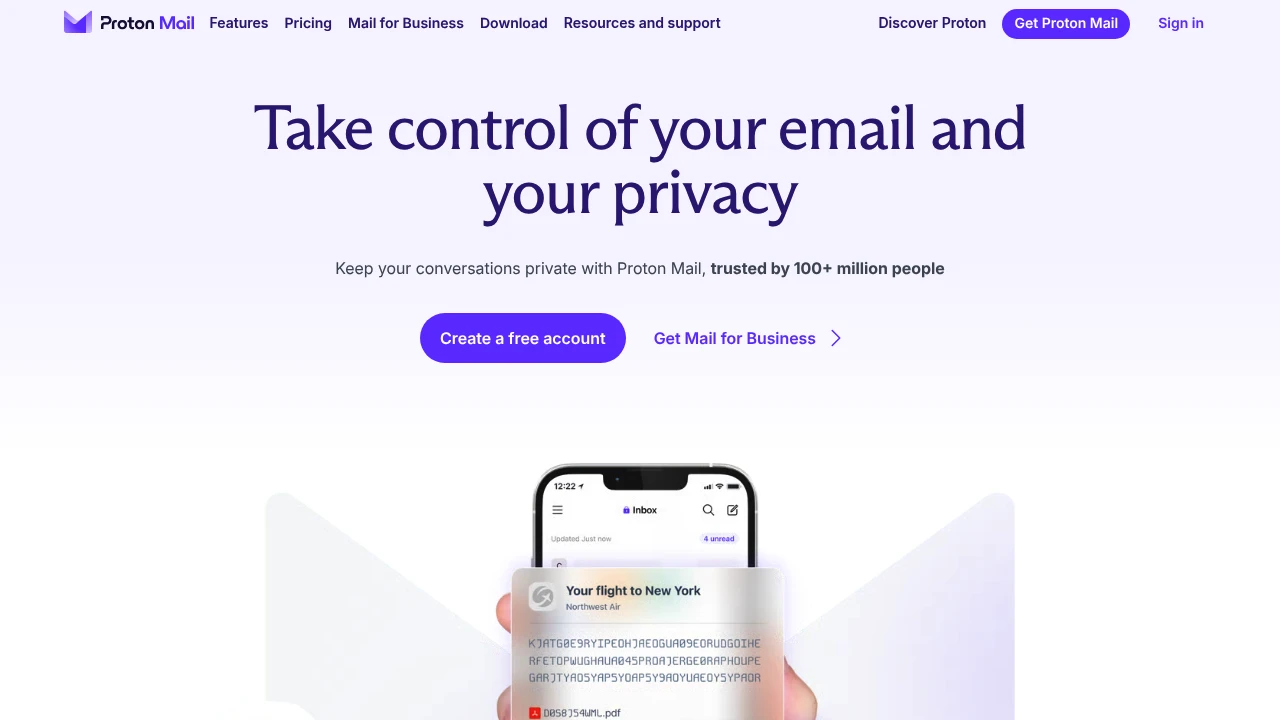
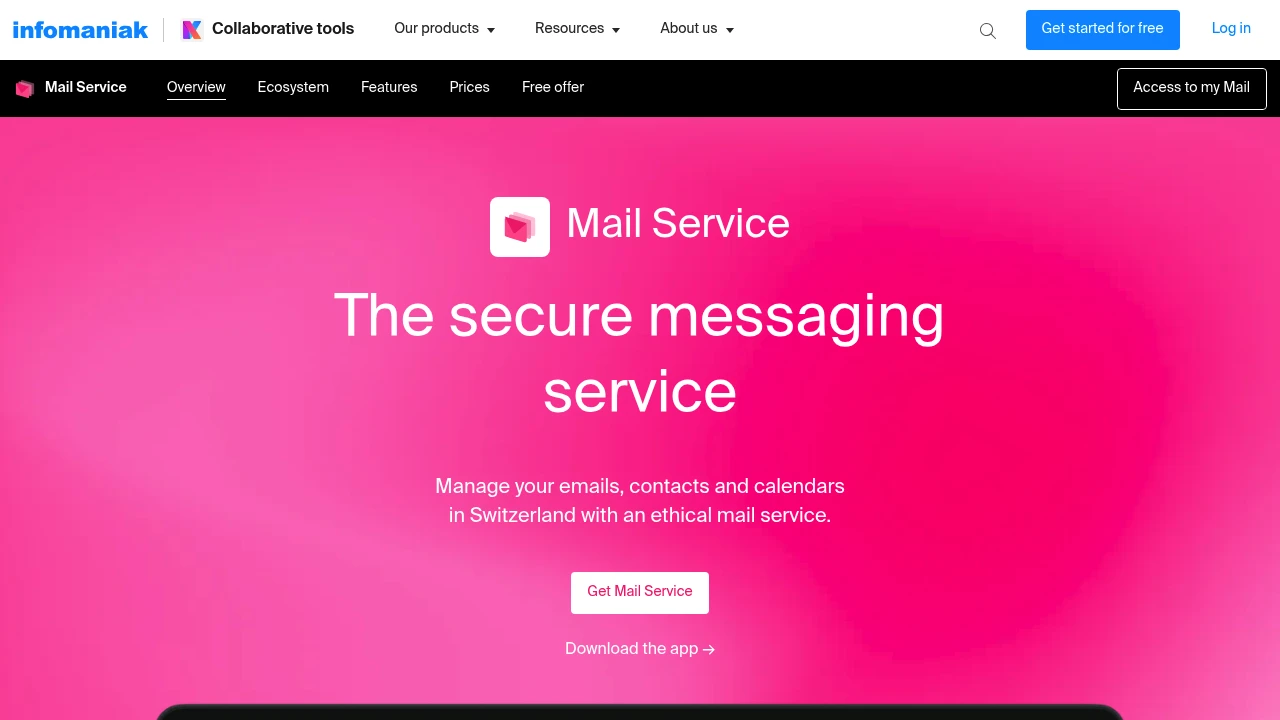
These providers offer complete email hosting with calendars, contacts, and collaboration features comparable to Google Workspace, all with guaranteed European data sovereignty.
Feature Comparison: Google Workspace vs European Alternatives
Email and Storage
Google Workspace: 30GB to unlimited storage depending on plan tier. Email stored in Google-controlled data centers, encrypted at rest but Google holds keys.
European Alternatives: Most offer 10GB to unlimited storage. End-to-end encryption available from providers like Proton Mail and Mailfence. You control encryption keys on zero-access platforms.
Calendars and Contacts
Google Workspace: Excellent calendar with AI-powered scheduling, integrated with Gmail. Contacts sync across Google services.
European Alternatives: CalDAV and CardDAV support ensures calendar and contact sync across all devices. Providers like Mailbox.org and Kolab Now offer comparable features without vendor lock-in.
Collaboration and Documents
Google Workspace: Industry-leading real-time collaboration with Google Docs, Sheets, and Slides. Seamless sharing and version control.
European Alternatives: Mailbox.org offers integrated office suite. Many European providers integrate with Nextcloud or OnlyOffice for document collaboration, matching Google's capabilities while keeping data in Europe.
Mobile Access
Google Workspace: Native Gmail and Calendar apps with excellent mobile experience.
European Alternatives: All providers offer mobile apps and webmail interfaces. Standard protocol support means you can use iOS Mail, Android clients, or third-party apps seamlessly.
Migration Ease
Google Workspace: Easy to onboard, deliberately difficult to leave due to proprietary formats and API dependencies.
European Alternatives: Most offer one-click migration tools that import your Google Workspace emails, contacts, and calendars automatically. Standard protocols make future migrations simple.
Support Quality
Google Workspace: Chatbot-first support, ticket systems, limited phone support even on premium plans. Support teams often outside Europe.
European Alternatives: Direct email and phone support from European teams. Many providers offer named account managers for business plans. Support staff understand GDPR and European business requirements.
Migration Guide: Moving from Google Workspace
Switching from Google Workspace to a European provider is straightforward with proper planning.
Step 1: Choose Your Provider and Plan
Select a European email host that matches your requirements. Consider:
- Team size: Some providers price per user, others offer family or team packages
- Storage needs: Most European providers offer more generous storage than Google Workspace basic tiers
- Encryption requirements: Decide if you need end-to-end encryption or if encrypted-at-rest suffices
- Protocol access: Determine if you need IMAP/SMTP for desktop clients or can use webmail
Step 2: Set Up Your Domain
Most businesses use custom domains (yourcompany.com) with Google Workspace. European providers support custom domains:
- Add your domain to your new European email provider
- Update DNS records (MX, SPF, DKIM) as instructed—this tells the internet where to deliver your mail
- Keep Google Workspace active during transition to avoid losing emails
Most providers offer detailed DNS setup guides and support to ensure smooth transition.
Step 3: Migrate Your Data
European providers typically offer migration tools:
Automated Migration: Services like Proton Mail, Mailbox.org, and Infomaniak provide one-click importers. You authorize access to your Google account, and they automatically copy:
- All emails and folder structures
- Contacts
- Calendar events
This process runs in the background and typically completes within hours to a day, depending on mailbox size.
Manual Migration: Alternatively, use IMAP to connect both accounts and drag-drop emails between them using Thunderbird or another email client.
Step 4: Update DNS and Test
Once your data is migrated:
- Update MX records to point to your new European provider
- Send test emails to ensure delivery works correctly
- Test calendar invites and contact syncing
- Configure all devices (phones, tablets, computers) with new email settings
Step 5: Communicate Change and Cancel Google
- Notify contacts of your email change if switching addresses
- Set up auto-reply on Google Workspace informing senders of your new address
- Keep Google Workspace active for 1-2 months as a safety net
- Export any remaining Google Drive data to your new provider or local storage
- Cancel Google Workspace subscription once you're confident everything has migrated
Cost Comparison
European email hosting often costs less than Google Workspace while offering better privacy and comparable features.
Google Workspace Pricing:
- Business Starter: €5.75/user/month (30GB storage)
- Business Standard: €11.50/user/month (2TB storage)
- Business Plus: €17.25/user/month (5TB storage)
European Alternative Pricing:
- Proton Mail: €8.99/user/month (15GB storage, includes VPN and calendar)
- Mailbox.org: €3/user/month (unlimited storage, includes office suite)
- Infomaniak Mail: €6.95/user/month (unlimited storage, includes 3TB cloud storage)
- Mailfence: €7.50/user/month (20GB storage, includes documents)
- Kolab Now: €8.66/user/month (unlimited storage, includes full collaboration suite)
Most European providers offer annual discounts, free trials, and no penalties for data export—stark contrasts to Google's ecosystem lock-in strategy.
Legal and Compliance Benefits
GDPR Compliance Simplified
European email providers make GDPR compliance straightforward:
- Data Processing Agreements (DPAs) are standard, not optional add-ons
- No international data transfers to worry about
- Clear data retention policies aligned with European expectations
- Right to deletion is actually implemented, not bureaucratically delayed
Industry-Specific Compliance
Healthcare: Providers like Mailbox.org and Mailfence offer encryption meeting medical confidentiality requirements. Swiss and German providers exceed HIPAA-equivalent standards.
Legal Services: Attorney-client privilege protection requires absolute confidentiality. European providers' end-to-end encryption and Swiss/Belgian legal protections provide this guarantee.
Financial Services: Banking regulations require data sovereignty. European email hosting eliminates foreign access concerns entirely.
Reduced Vendor Risk
Relying on Google Workspace concentrates risk: algorithm changes, policy updates, pricing increases, or even service shutdowns happen unilaterally. European providers operate under consumer protection laws giving you contractual rights and legal recourse.
Common Questions About Switching
Can I keep my current email address? Yes, if you use a custom domain. You'll update DNS settings to point to your new provider, keeping your email address unchanged.
Will emails from Gmail users reach me? Absolutely. Email is an open standard. You can receive mail from any provider, and European providers often have better spam filtering and delivery rates than Google.
Can I still use my iPhone's Mail app? Yes. Most European providers support standard protocols (IMAP/SMTP), allowing you to use any email client. Some encrypted providers require their own app or bridge software.
What about calendar sharing with external partners? European providers support standard calendar sharing via CalDAV. You can share calendars with anyone, regardless of their email provider, including Google Calendar users.
Is migration difficult for non-technical teams? No. Most European providers offer migration wizards that handle the technical complexity. Your team just needs to update email settings on their devices, which providers document clearly.
Why Now Is the Time to Switch
The legal landscape for US cloud services in Europe continues deteriorating. Court rulings, regulatory guidance, and enforcement actions increasingly challenge the viability of using US providers for European data.
These same legal concerns apply across Google's entire infrastructure stack. If you're using Google Cloud Platform for hosting, read our guide on European alternatives to Google Cloud to ensure your entire technology stack meets European sovereignty requirements.
Recent developments include:
- Schrems II ruling invalidated Privacy Shield data transfers
- Austrian DPA ruling against Google Analytics sets precedent for email concerns
- Belgian DPA guidance recommends against US cloud providers for sensitive data
- French CNIL warnings about Microsoft 365 and Google Workspace compliance issues
European email providers eliminate these concerns entirely while offering superior features, better pricing, and genuine data sovereignty.
The question isn't whether to switch from Google Workspace—it's how quickly you can migrate to protect your business from legal risk while improving your email infrastructure.
European email hosting represents better technology, better privacy, better compliance, and often better value. The only question is which provider matches your specific needs.
 SparkReceipt — Never lose another receipt. Get your bookkeeping down to ten minutes a month.